Frames, Frames, Frames
Originally posted as a thread on X.
@ethereum has had an account problem since day one. Last Friday @WPReadingClub hosted by @ethereumsf and @frontiertower we broke down EIP-8141, why it matters, and why it took 12 years to get here.
The Account Problem
When Ethereum launched in 2015, the account model was rigid. EOAs were controlled by a single private key, no programability. Contract accounts were smart but couldn't initiate transactions and there was no tooling or standards to build wallets. The team knew this was an issue before launch. However, they couldn't fix it without introducing a new security risk. The network could easily be DoS attacked if validation logic lives at the contract level rather than being network-defined. Attackers could submit transactions that look valid until execution, wasting node resources without paying for them. They couldn't solve this problem in time, so they shipped without it.
A Decade of Workarounds
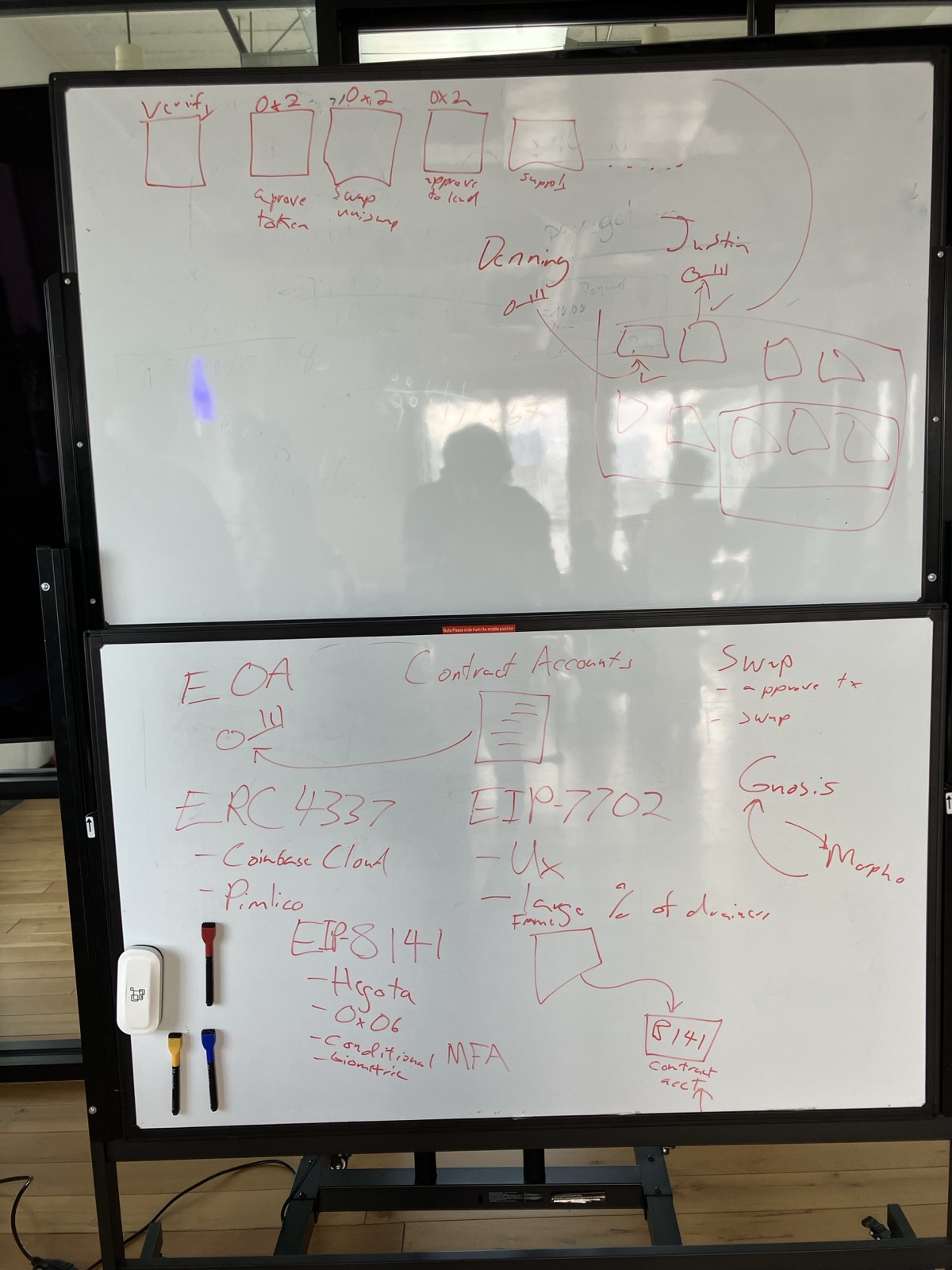
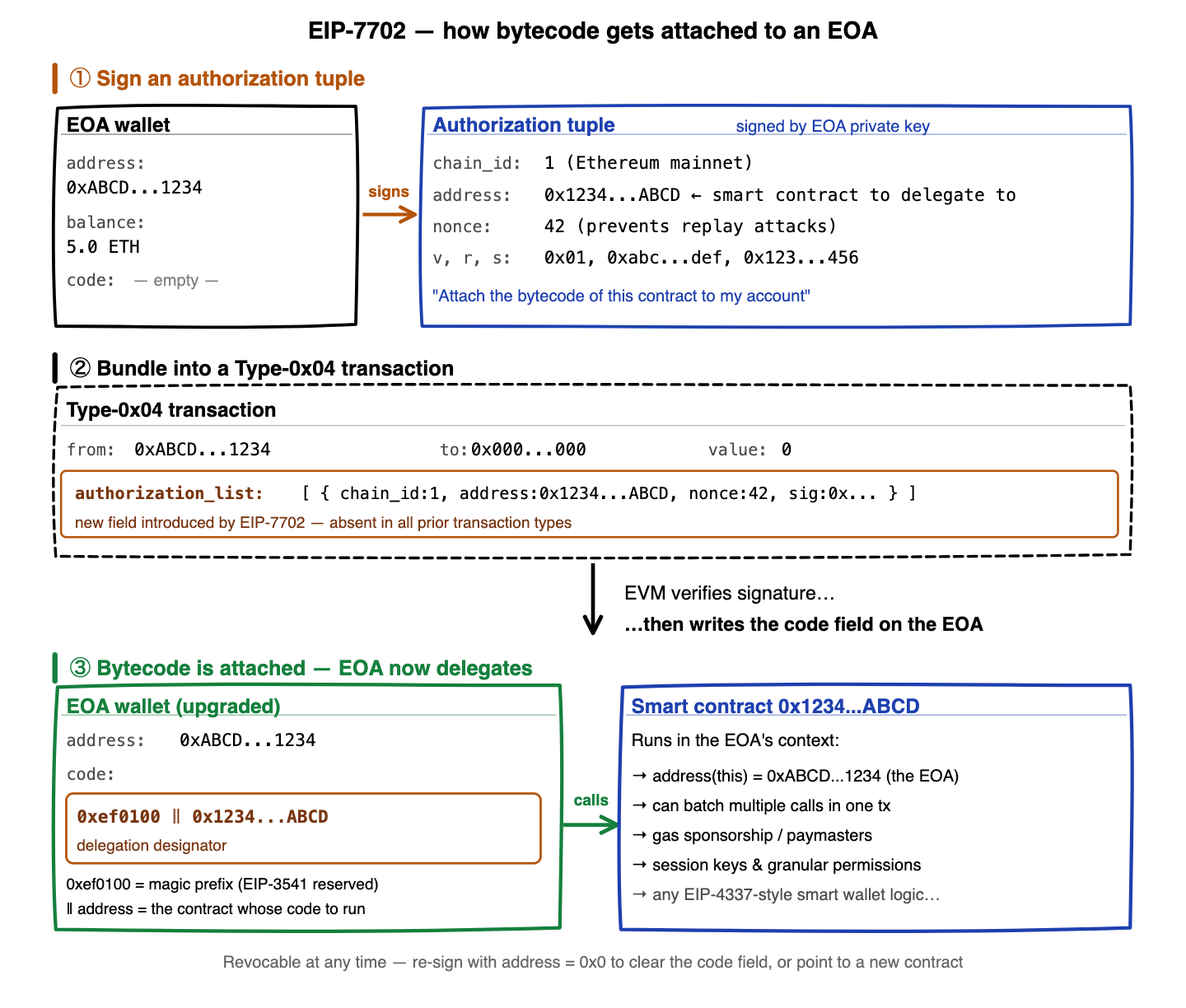
The ecosystem spent the next decade building workarounds. ERC-4337 created a parallel transaction pipeline: alt-mempool, bundlers, EntryPoint contract, paymasters. EIP-7702 let EOAs borrow smart contract logic without migrating assets. Neither enabled true AA in a developer and user friendly way.
EIP-8141: Frame Transactions
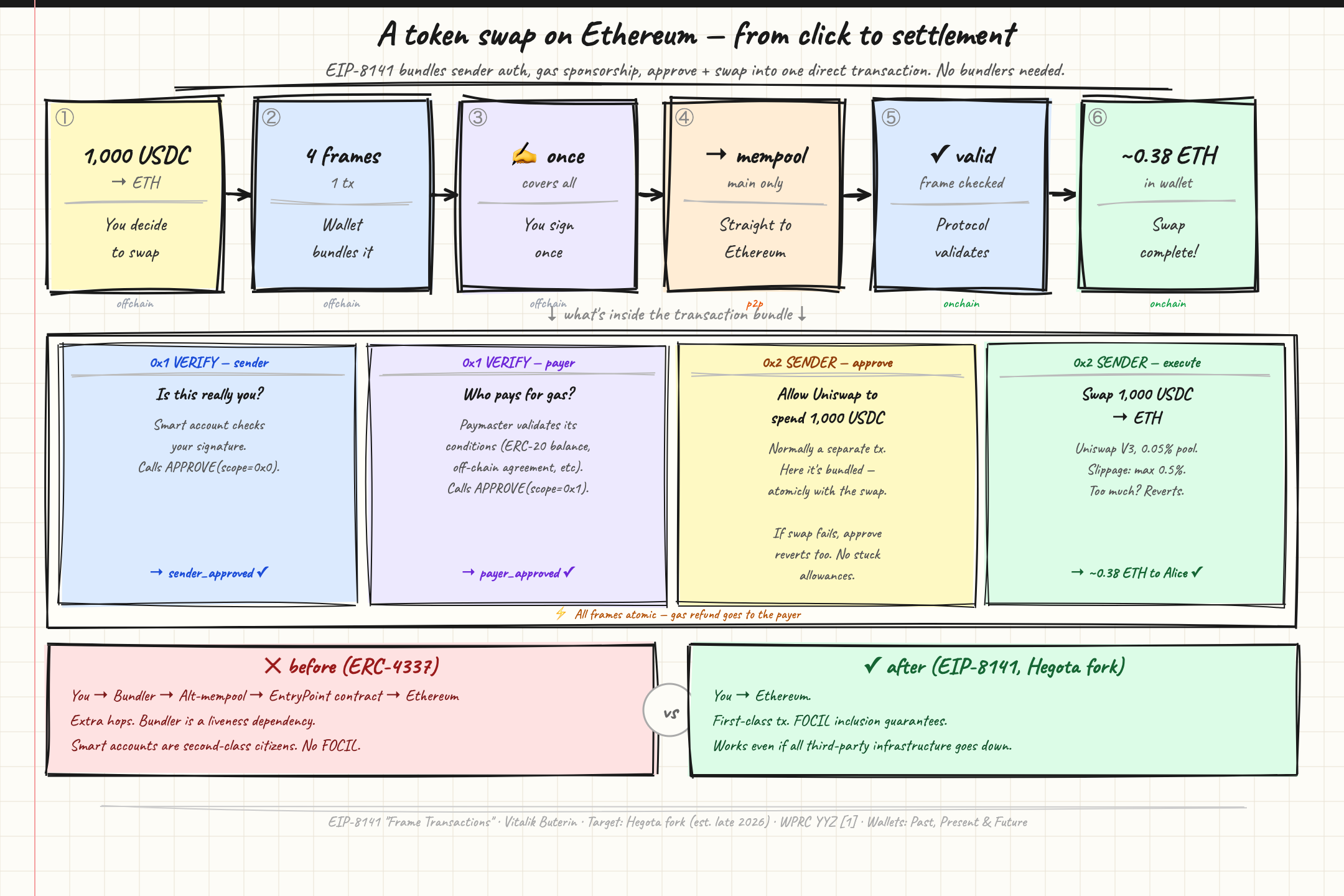
EIP-8141 introduces frame transactions. A single transaction type that bundles up to 1,000 composable execution frames, each with its own programmable validation logic enforced at the protocol level — not in a contract layer sitting on top of it. No bundlers. No EntryPoint. No alt-mempool. The infrastructure that companies like Coinbase Cloud and Pimlico built their businesses on becomes transitory.
What This Unlocks
What this actually unlocks is a whole new design space for wallets. Agent wallets that can sign constrained operations autonomously. Quantum-resistant key migration as an in-place upgrade rather than an asset migration exercise. Conditional multisigs where a large transfer requires 2-of-3 signatures, but routine transactions only require one. Natively multichain ZK wallets with complex transaction policies, without trusted third parties and custodians. Passkey and biometric auth without the 200,000 gas verification cost that made it impractical before RIP-7212.
The DoS Problem, Revisited
We spent a good amount of time on the DoS problem specifically. Because frame transaction validity is context-dependent, an attacker can flood nodes with transactions that appear valid until execution. This burns node resources without paying for the computation. This same security risk blocked native AA in 2015. The difference now is that EIP-8141's validation model gives the protocol enough information to reject invalid frames early, before they consume node resources.
The Wallet End Game
For wallet developers this is a clean slate. No more trusted third parties in the transaction pipeline. No more operational dependency on bundler infrastructure you don't control. Frames allow fully expressive, non-custodial wallets to become the default path, not the exception. For users, the wallet end game looks like your iCloud account, one address, passkey auth, multi-factor authentication, configurable approval policies, all without giving up self-custody.
For agents and other wallet developers, ERC-8150 a standard for agent guardrails and standards is being pushed forward by @Vishwa_xyz. There is a clear overlap here between these standards, since in the not so distant future, agents will be responsible for the majority of DeFi yield automation, portfolio management, and payments.
Acknowledgments
It was a great first session and I want to thank @nathan_sj_stem and Justin for presenting on ERC-8150, @mrrongxin, and @tms7331 for coordinating everything as well as @tandkyu for helping shape the final document into WPRC format. And last but certainly not least, thanks to everyone who came out, asked questions, and participated in the discussion. @sui414 @matt_bitcoin @0xfishylosopher @DacEconomy

The full paper with deep dives on ERC-4337, EIP-7702, RIP-7212, and the complete EIP-8141 spec is here: Wallets: Past, Present & Future